

For Dogs & Cats with Persistent GI Instability
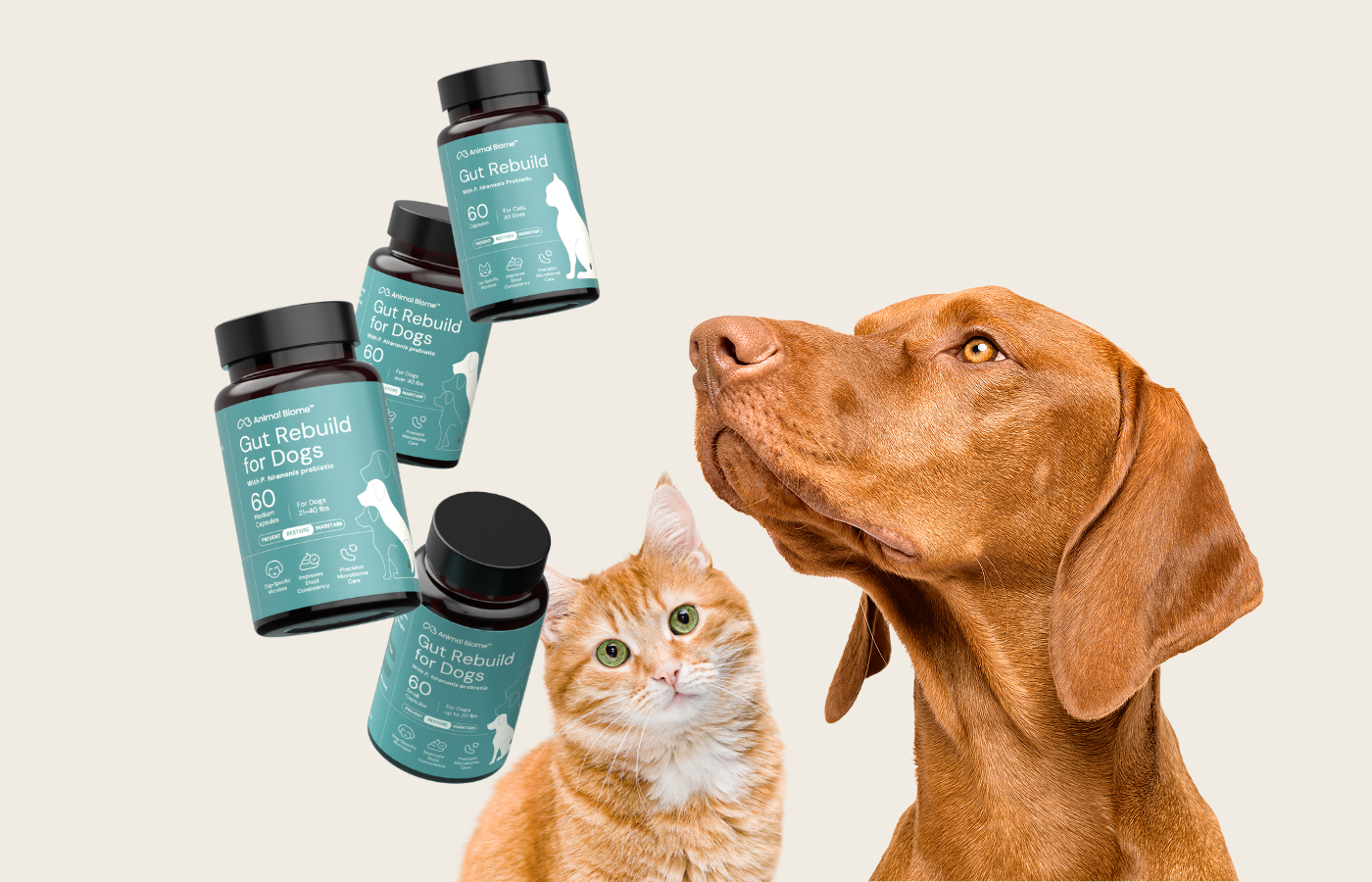
Introducing Gut Rebuild for Cats & Gut Rebuild for Dogs
Restore bile acid metabolism with a species-specific, highly targeted probiotic built around P. hiranonis.


What is Gut Rebuild?
Gut Rebuild is a synergistic formulation specifically for cats and dogs experiencing mild to moderate dysbiosis, particularly following antibiotic use. Built around Animal Biome’s proprietary, species-specific Peptacetobacter hiranonis strains, Gut Rebuild supports bile acid metabolism, stool consistency, and overall gut homeostasis.
What Problem Does Gut Rebuild Solve?
What Makes Gut Rebuild Different Than Standard Probiotics?
Most probiotics are selected for stability and ease of manufacturing, not for functional relevance in the target species.
Gut Rebuild is a multi-modal, function-first formulation designed for precision modulation.
*Examples of standard probiotics include Proviable®, Visbiome®, and FortiFlora®
Why Gut Rebuild Works: A Precision, Function-First Approach
-
Species-specific, commensal microbes
Gut Rebuild delivers a single, species-specific commensal strain to provide targeted microbiome support, while Gut Restore provides thousands of commensal microbial groups to help reestablish a complete gut ecosystem. Both are sourced directly from healthy microbiomes of the same species, ensuring natural compatibility. Unlike conventional probiotics, they are not based on human-derived research or lab-cultured strains for commercial use.
-
Clinically proven to increase keystone species
Gut Rebuild contains concentrated, live P. hiranonis that has been clinically shown to restore this lost keystone species in the gut microbiome.
-
Improves Bile Acid Conversion
Clinical evaluation demonstrates that with sustained daily use for at least 30 days, Gut Rebuild supports:
- Improved bile acid conversion
- Improved dysbiosis markers
- Improved stool consistency

Precision Microbiome Modulation
Precision microbiome modulation means intentionally targeting specific microbes and functions in the gut, rather than broadly adding bacteria.
Instead of introducing a general mix of microbes (like Gut Restore or traditional probiotics), it focuses on:
- restoring key missing species (e.g., P. hiranonis)
- correcting specific functional deficits (like bile acid metabolism)
- reducing problem microbes (like E. coli)
In simple terms, it’s a targeted, function-driven approach to fixing the microbiome, rather than a one-size-fits-all approach.
Gut Restore remains the only product on the market designed to deliver a complete microbiome replacement, containing the full spectrum of commensal microbial groups from a healthy, species-matched donor.

When to Consider Gut Rebuild
Gut Rebuild is formulated for patients experiencing dysbiosis and dysregulated bile acid metabolism. It may be used on its own in cases of mild to moderate GI symptoms, or alongside Gut Restore in patients with more severe symptoms or significant dysbiosis.
Use Cases:
- Chronic or recurrent soft stool, diarrhea, or constipation
- Recent antibiotic exposure (especially metronidazole)
- Age-related microbiome decline (typically for pets over 7 years)
- Absence or low abundance of P. hiranonis on microbiome testing
- As an adjunct to FMT to support engraftment and durability

The Science Behind Gut Rebuild
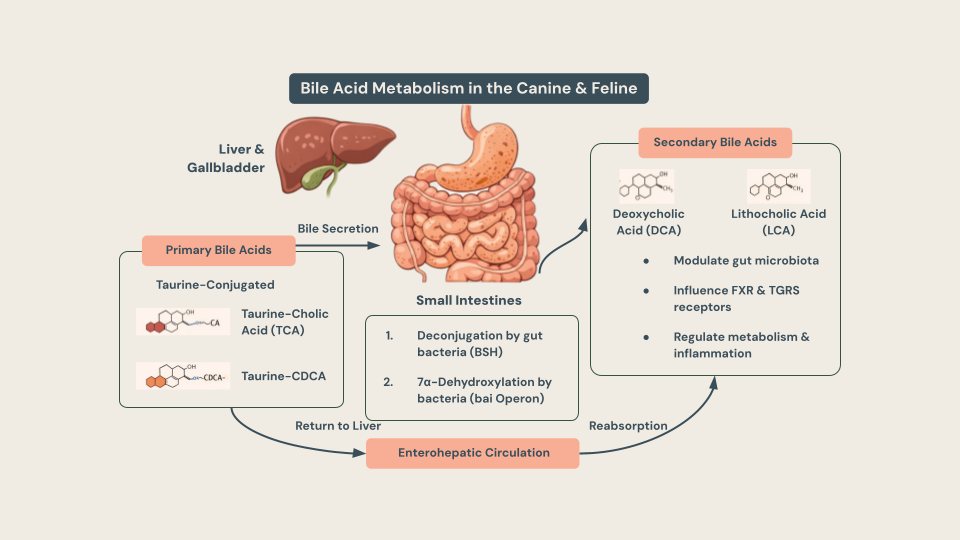
Peptacetobacter hiranonis is a keystone bacterial species responsible for converting primary bile acids into secondary bile acids, a process that is critical for regulating gut inflammation, pathogen resistance, and stool consistency.
When P. hiranonis is depleted, the gut loses its ability to convert primary bile acids into secondary bile acids efficiently, which regulates immune balance and barrier integrity. This disruption shifts the bile acid profile, weakens key signaling pathways, and contributes to persistent dysbiosis and ongoing GI instability. Gut Rebuild is formulated to help restore this metabolic function and support normalization of bile acid conversion, resulting in a more balanced, more diverse, and more resilient gut microbiome.
To learn more about the science behind bile acid dysregulation and clinical restoration strategies, watch the webinar.
Questions? Our Veterinary Team Is Here to Help.
Contact Information:
Call: 1 (888) 506-5686
Outside the U.S.: 1 (503) 743-8315
Email: team@animalbiome.vet
Suggested Reading
Németh K, Tóth I, Lányi K, Schilling-Tóth BM, Csorba S, Žura Žaja I, Sterczer Á. The Collaborative Collapse: Bile Acid Dysmetabolism as a Central Pathogenic Driver in Canine and Feline Multi-Systemic Disorders—From Mechanisms to Precision Therapeutics. Veterinary Sciences. 2026; 13(2):182. https://doi.org/10.3390/vetsci13020182

2945 Webster St., FL 2
Oakland, CA 94609
U.S. customers call:
Outside the U.S. call: